
Last updated November 22, 2026
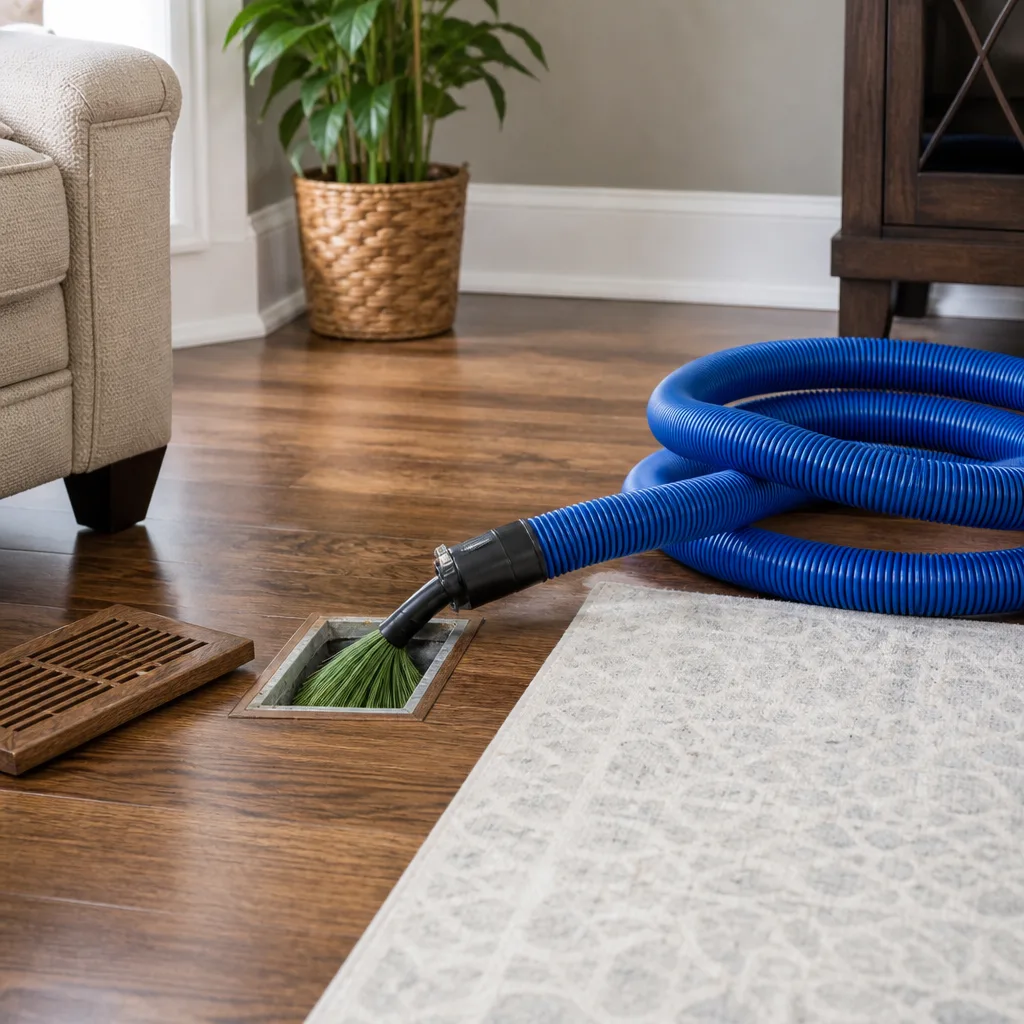 Whole-home duct cleaning
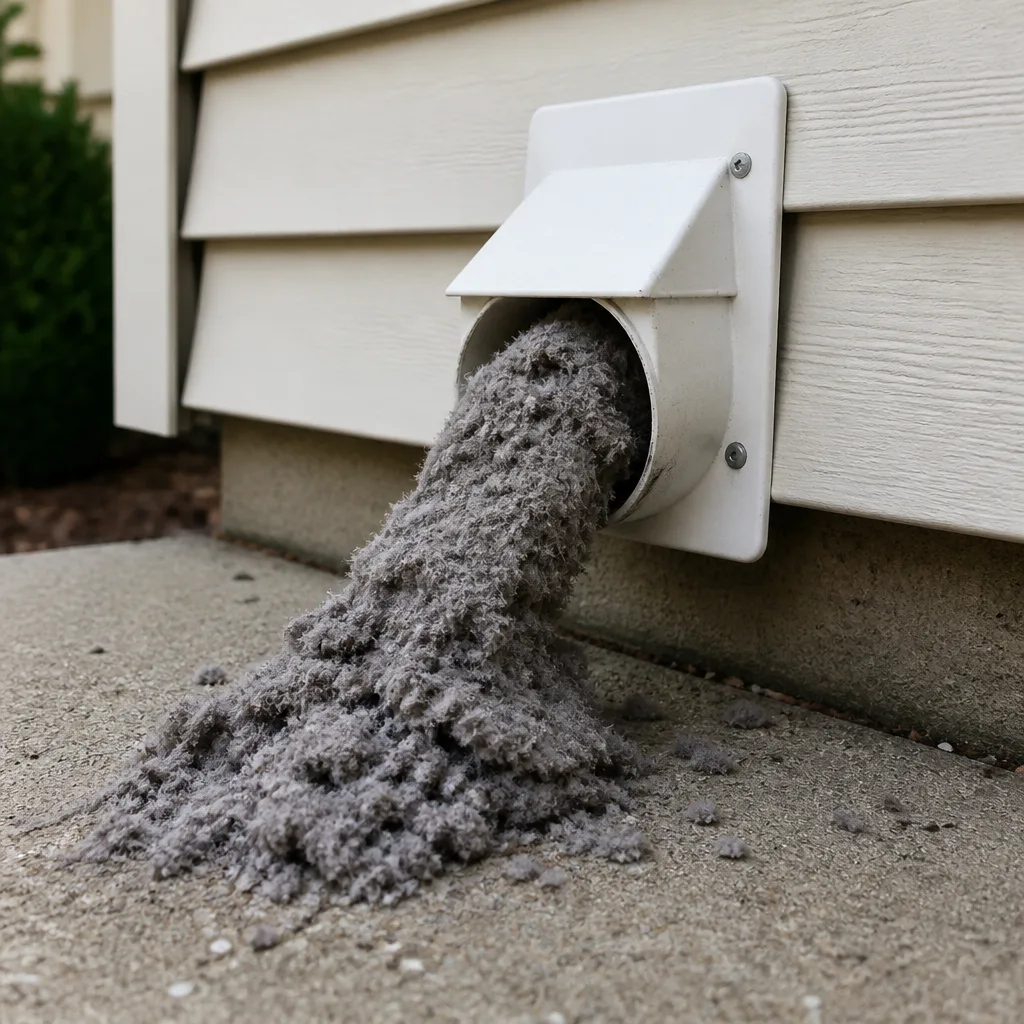 Dryer vent cleaning
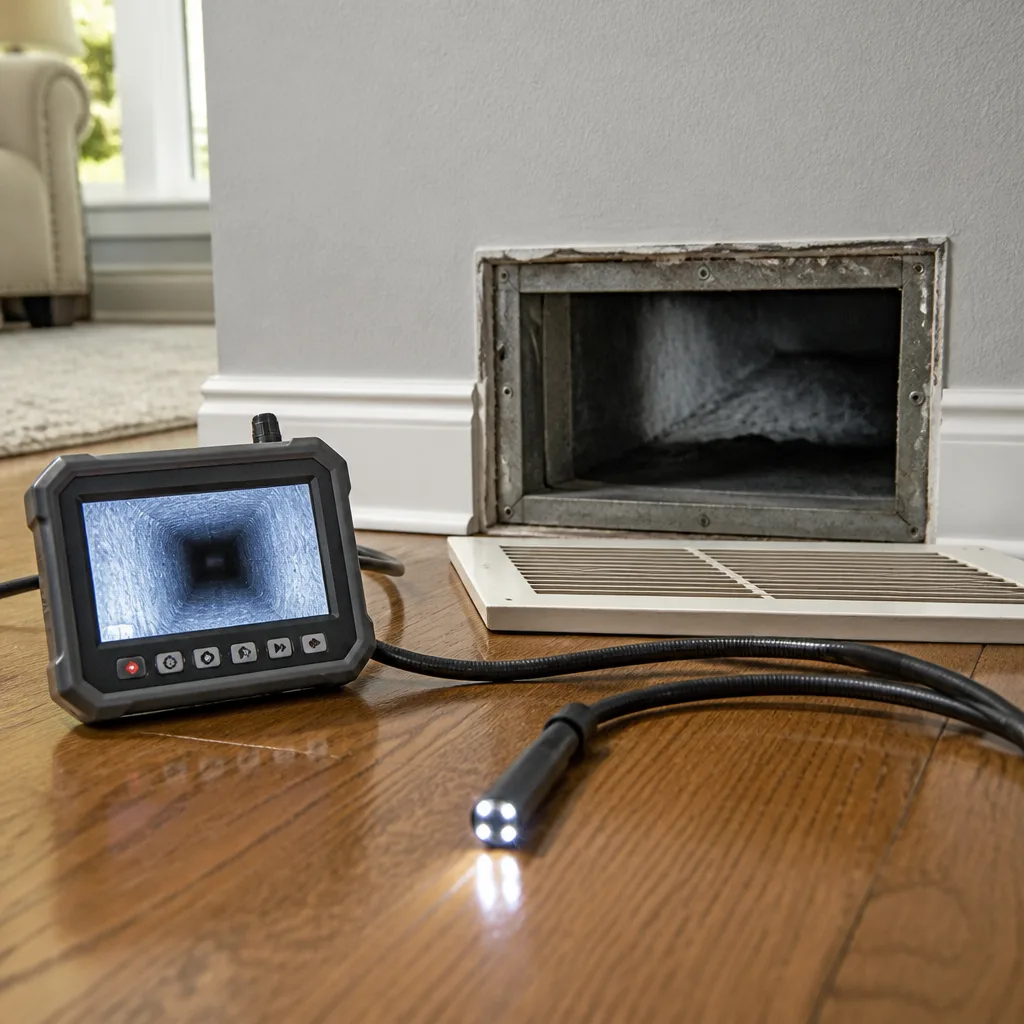 Camera inspection
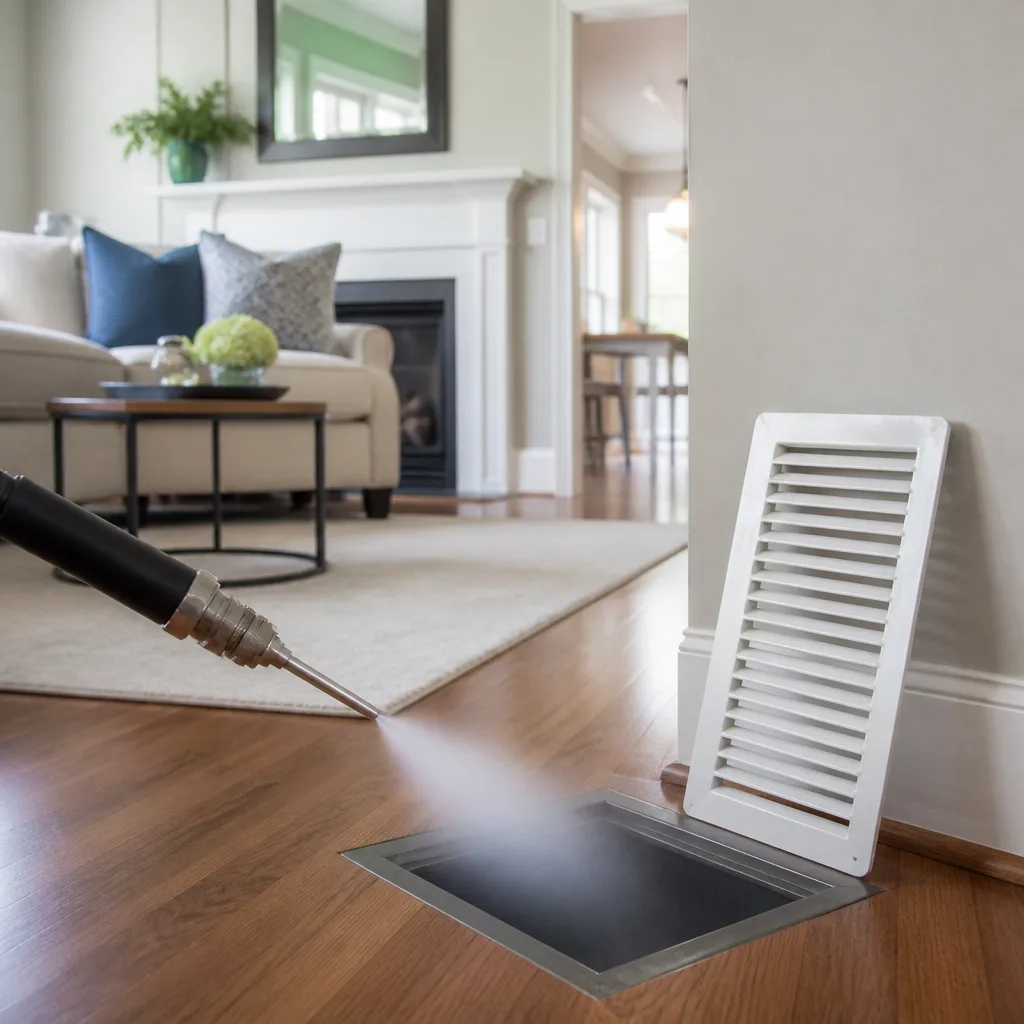 Sanitizing & deodorizing
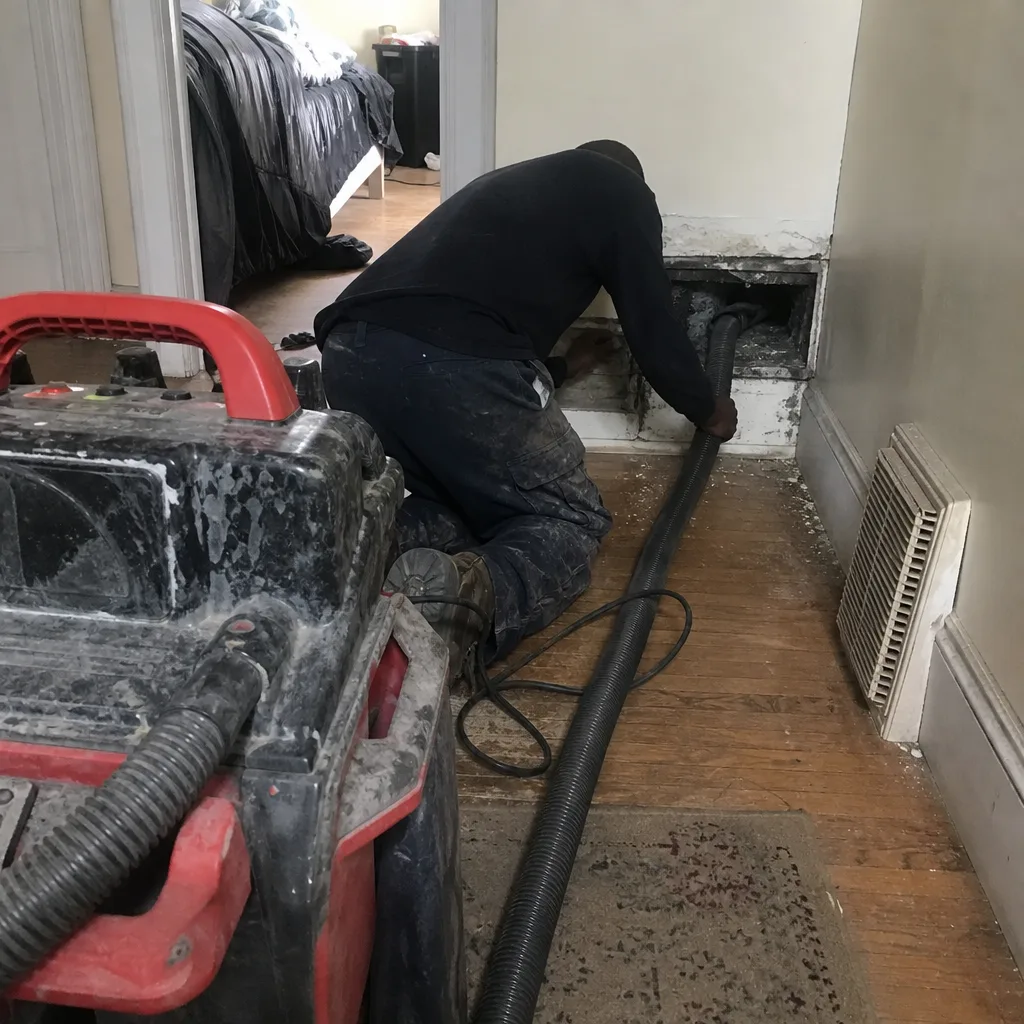
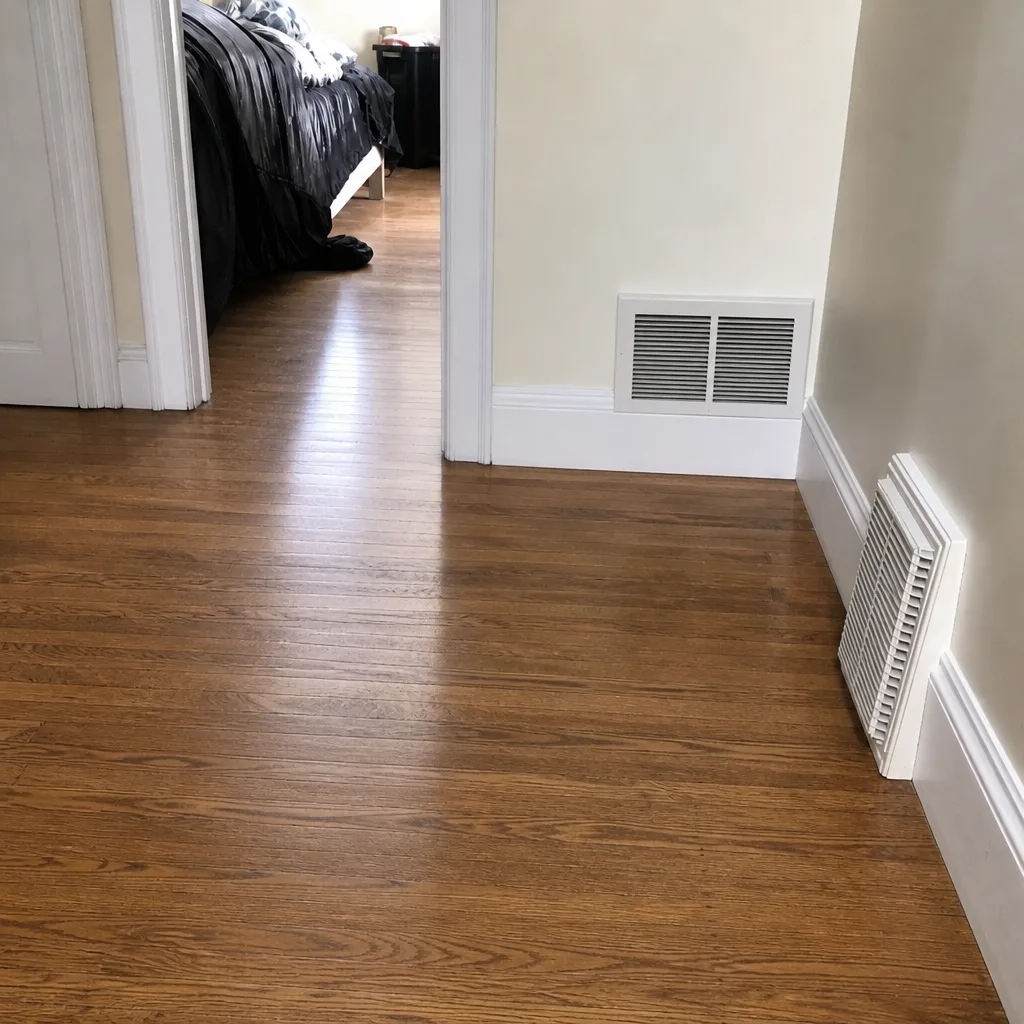
Whole-system duct and dryer vent check with before-and-after photos - you see exactly what came out of your vents
That "$99 whole-house special" is a bait ad - the real number appears once they are in your hallway, or the "clean" is a shop-vac at the register. We photograph the inside of your ducts before and after instead.
Seasonal Air Duct Cleaning Care for Bedford-Stuyvesant: Year-Round Homeowner’s Guide
Most homeowners treat air duct cleaning as a once-a-decade decision, or they schedule it after something already smells wrong. Both miss the point. In Bedford-Stuyvesant the ductwork inside a brownstone or a renovated rowhouse moves through four very different conditions each year, and each one leaves its own kind of debris behind. October is the clearest example: mouse activity in basement mechanical rooms tends to spike as temperatures drop, and by the time a winter tune-up happens, nesting material often sits right in the return plenum. This guide walks through what each season actually does to your ducts, what to check, and how to sequence the work.
Quick Answer
Air duct work in Bedford-Stuyvesant is best scheduled by season rather than once a year: spring protects against renovation dust pulled into return air, summer catches humidity damage and mold risk in flex duct, fall addresses the rodent and intrusion window at basement plenums, and winter exposes startup problems on a system that has sat idle. A full professional cleaning handles contamination, but duct repair and sealing is what stops the source from coming back.
Styles & brands we work with
- Whole-home duct cleaning
- Dryer vent cleaning
- Camera inspection
- Sanitizing & deodorizing
Table of Contents
- Why seasonality matters more in Bedford-Stuyvesant than in most places
- Spring: renovation dust and positive-pressure isolation
- Summer: humidity, mold risk, and condensation in flex duct
- Fall: rodent intrusion at basement plenums and return ducts
- Winter: startup checks after a system sits idle
- How to sequence duct cleaning against HVAC service calls
- A year-round homeowner’s checklist
- What the work typically costs
Why seasonality matters more in Bedford-Stuyvesant than in most places
Bedford-Stuyvesant has a housing stock that makes duct work unusually seasonal. A large share of the neighborhood’s brownstones and rowhouses were built before central air existed, which means ductwork was retrofitted into spaces that were designed for radiator heat and window units. Retrofitted ducts run through tight chases, low basement ceilings, and finished walls. Every one of those runs is a place where debris can settle and where a small breach becomes a bigger problem.
Add the neighborhood’s renovation cycle and the seasons stop being background noise. Gut-rehab season brings airborne gypsum dust, sawdust, and insulation fibers into the same air that feeds return grilles. Summer humidity moves through basement ductwork that is often cooler than the air around it. Fall brings wildlife looking for warmth. Winter tests every joint with dry heat and drastic temperature swings.
That is why a generic reminder to clean your ducts every few years doesn’t map cleanly onto a Bedford-Stuyvesant home. The question isn’t whether you should clean. It’s what kind of debris you’re dealing with this month, and whether a cleaning alone will hold.
Spring: renovation dust and positive-pressure isolation
Spring is when Bedford-Stuyvesant’s renovation season goes into full swing. Scaffolding, dumpsters, and gutted interiors are part of the streetscape from April onward. That’s good for the housing stock and hard on the ductwork in any home nearby, including the one next door.
Construction dust is different from household dust. It’s heavier, it’s abrasive, and it travels. When a renovation is happening on your block or in your own building, fine gypsum and masonry dust gets pulled into return air and settles on blower wheels, in return drops, and along flex duct runs. Left alone, that layer collects moisture and becomes a base for mold growth once summer arrives.
What positive-pressure isolation actually does
Positive-pressure isolation keeps construction dust out of the living space’s air system by keeping the work area at a slightly higher pressure than the rooms around it, with filtered exhaust drawing air out rather than letting it drift in. It’s the same idea Abatement Technologies equipment is built around: containment and negative-air filtration designed to keep contaminants from crossing a barrier. During a renovation, that barrier matters as much as the duct cleaning that follows it.
What to check in spring
- Return grille covers in rooms nearest the renovation – look for a visible film of fine gray dust.
- The blower compartment – a coated blower wheel means dust is already inside the system.
- Filter condition – a filter that loads in weeks instead of months is a sign of ongoing intrusion.
- Any gaps at duct joints in basement chases that open toward a work area.
When renovation dust has already entered the system, professional air duct cleaning with mechanical agitation and high-powered extraction is the standard next step. A rotary brush system like Rotobrush loosens the settled layer that a vacuum alone will not lift.
Summer: humidity, mold risk, and condensation in flex duct
August in Bedford-Stuyvesant is when ductwork works hardest and fails quietest. Basements here stay cooler than the air above them, and air conditioning drops the temperature inside duct runs further. Warm humid air meeting a cold duct surface is how condensation begins.
Flex duct is especially exposed. Its outer jacket can hide a damp inner liner for weeks. By the time a homeowner notices a musty smell on the second floor, the duct may already carry visible microbial growth. That moves the job from a cleaning to a repair and remediation scope, which costs more and takes longer.
How to identify condensation damage before it becomes a remediation job
- Check the flex duct jacket in the basement or mechanical closet for dark patches, sagging, or a cold, sweaty feel.
- Smell the supply registers in the most humid rooms – a musty, damp-earth odor is the clearest early signal.
- Look for water staining at duct hangers or where flex duct meets rigid trunk lines.
- Check whether the duct runs through an unconditioned space without insulation – an uninsulated run in a humid basement is where damage starts.
- Note any increase in allergy symptoms inside the home during humid weeks.
Aprilaire and Honeywell products come into play here because filtration and humidity control work together. Good filtration captures spores before they settle; controlling humidity removes the condition that lets them grow. Sanitizing services belong in the same conversation. We use Abatement Technologies negative-air and filtration equipment so that the work is done with containment, not just a spray.
If the ducts are already damaged, cleaning alone won’t fix it. HVAC cleaning handles the air handler and coil, while duct repair and sealing closes the gaps that let humid air in. Doing one without the other is how a summer problem repeats every year.
Fall: rodent intrusion at basement plenums and return ducts
October is when mouse activity in Bedford-Stuyvesant basement mechanical rooms rises, and November is when most homeowners first notice. The reason is simple. As outdoor temperatures drop, small animals look for warmth and easy access, and basement duct systems offer both. A cracked flex duct, an unsealed penetration where a duct passes through a foundation wall, or a gap at the return plenum is all it takes.
Rodent activity near return ducts is a contamination issue, not just a pest issue. Nesting material, droppings, and fur become airborne the moment the system runs. The return side is the worst place for it because return air is pulled through the system and redistributed to every room it serves.
How to identify evidence of nesting in return ducts
- A musky, animal odor that appears when the heat first comes on in fall.
- Droppings or nesting material visible around the return plenum, on top of duct runs, or along the basement sill plate.
- Chew marks on flex duct jacketing or insulation, especially near foundation penetrations.
- Small tears or punctures in flex duct that weren’t there in spring.
- Increased dust around return grilles that appears suddenly in a matter of weeks.
Cleaning is only half the response. Duct repair and sealing is what closes the entry point. Without it, the same gaps that let the animals in let them back in next fall. In our experience, homes in Bedford-Stuyvesant that get both cleaning and sealing in the same visit hold clean far longer than homes that clean only. If you own a rental property, this is also the season to walk basement mechanical rooms before tenants start running heat.
Winter: startup checks after a system sits idle
Winter is when the ducts are most often blamed for something that happened in the shoulder months. A forced-air system that sat largely idle through October often starts for the season with debris that accumulated while it wasn’t running. Two things are worth checking before the thermostat gets turned up.
Blower wheel debris
A blower wheel collects a thin, even coat of dust all summer. By the first cold week, that coat is thick, unbalanced, and cycling through the system on every run. A coated blower wheel moves less air, which means longer run times and uneven heat across a Bedford-Stuyvesant brownstone’s multiple floors. It also blows more dust into every register in the house.
Cracked flex duct from temperature swings
Winter heat and drastic temperature swings between a heated living space and a cold basement stress flex duct at the joints and where it bends around framing. A crack in flex duct is a direct leak. It loses heated air into the basement before it reaches a room, and it pulls unfiltered basement air into the supply system.
Winter startup checklist
- Turn the system on and listen at the air handler for a rattle or hum that wasn’t there in fall.
- Check airflow at each supply register – weak airflow in one room often means a leak or a disconnected run.
- Look at the flex duct jacket along the basement run for cracks, tears, or loose tape.
- Replace the filter before the first cold week, not after.
- Note any new odor at startup. A dusty smell that fades in minutes is normal. A smell that persists means the air path needs a professional look.
How to sequence duct cleaning against HVAC service calls
Both duct cleaning and HVAC service are seasonal purchases, and doing them in the wrong order wastes money. The right sequence is straightforward once you know the rules.
- HVAC service first, duct cleaning second. If a technician is going to open the air handler, replace a blower, or service the coil, any dust knocked loose during that work ends up in the ducts. Cleaning afterward picks it up. Cleaning before means you clean twice.
- Duct repair before duct cleaning, not after. Any open breach, disconnected run, or cracked flex duct will let loosened debris escape into the surrounding space during cleaning. Sealing first contains the work.
- Sanitizing after cleaning and sealing, not before. Sanitizing products work on a clean surface. Applied to a dirty one, they do little.
- Dryer vent cleaning separate from HVAC service. The dryer vent is its own pathway and its own fire risk. It deserves its own appointment, and we treat dryer vent cleaning as a distinct service for exactly that reason.
The contractor coordination part is where most homeowners get stuck. If the HVAC technician is scheduled in October and the duct cleaner in November, the November cleaning is working against a system that just moved a season’s worth of debris around. Booking both windows before either starts, and telling each what the other is doing, is what stops them from undoing each other’s work.
A year-round homeowner’s checklist
If you want a single page to print and pin in the basement, this is it. The point isn’t to clean constantly. It’s to check at the right time so that when a real cleaning is needed, it’s not already a repair job.
- March: Look at return grilles nearest any ongoing renovation. Replace the filter before it loads.
- April through June: If your home or a neighboring unit is being gut-renovated, confirm containment is in place and check ducts afterward.
- July: Inspect flex duct in the basement for condensation, sagging, or dark patches.
- August: Check for musty odor at supply registers in the most humid rooms.
- September: Replace filter and note any change in allergy symptoms inside the house.
- October: Walk the basement plenum for droppings, chew marks, and nesting material.
- November: Schedule duct repair and sealing if you found any intrusion point in October.
- December: Run the winter startup checklist before the first cold week.
- Any time: Book dryer vent cleaning when the dryer takes longer than usual to dry a load.
What the work typically costs
In Bedford-Stuyvesant, a standard whole-home duct cleaning usually falls in a wide range because duct length and number of runs vary so much between a small rowhouse and a three-story brownstone. The numbers below are typical estimates, and the written estimate is what sets the final price.
- Whole-home air duct cleaning: roughly $350 to $800 for a typical Bedford-Stuyvesant home, more for larger multi-floor layouts.
- Dryer vent cleaning: roughly $100 to $200 depending on run length and lint load.
- HVAC cleaning (air handler, blower wheel, coil): roughly $200 to $500 depending on system size and access.
- Duct repair and sealing: priced per job after an inspection, since the scope depends on where the breaches are.
- Air quality and sanitizing: priced per job, since filtration, UV treatment, and containment scope each add equipment.
One flat price per system, agreed before work starts, is the standard we hold. No per-vent pricing, and before-and-after photos of your own ducts so you can see what was removed. If a quote arrives as a low teaser price that grows once a technician is on site, that is worth questioning before work starts.
Common Mistakes to Avoid
- Cleaning ducts before the HVAC service. The HVAC technician will knock loose dust into the system. Book the HVAC service first, then the cleaning. Doing it backward means paying twice for the same job.
- Ignoring return grilles during renovation season. The return side pulls more dust than the supply side. A return grille in a room next to a renovation is where contamination shows up first, and it’s the easiest place to check.
- Cleaning instead of sealing. A cleaning without repair and sealing leaves the entry point intact. Next fall the same intrusion happens at the same gap.
- Treating flex duct as durable. Flex duct cracks at bends and where it passes through framing. In Bedford-Stuyvesant basements, where runs often transition through tight framing, that failure point is where most leaks start.
- Skipping the dryer vent because the dryer still dries. Reduced lint capacity shows up as extra cycles long before it becomes a fire risk. If the dryer takes two cycles, get the vent cleaned.
- Buying sanitizing on a dirty system. Sanitizing works on a clean surface. Applied to a duct that hasn’t been cleaned in years, it does very little for the air quality you can actually measure.
- Waiting for a smell. Mold and rodent activity don’t always announce themselves. By the time a homeowner in Bedford-Stuyvesant smells something, the source is usually a repair job, not a cleaning.
See the difference
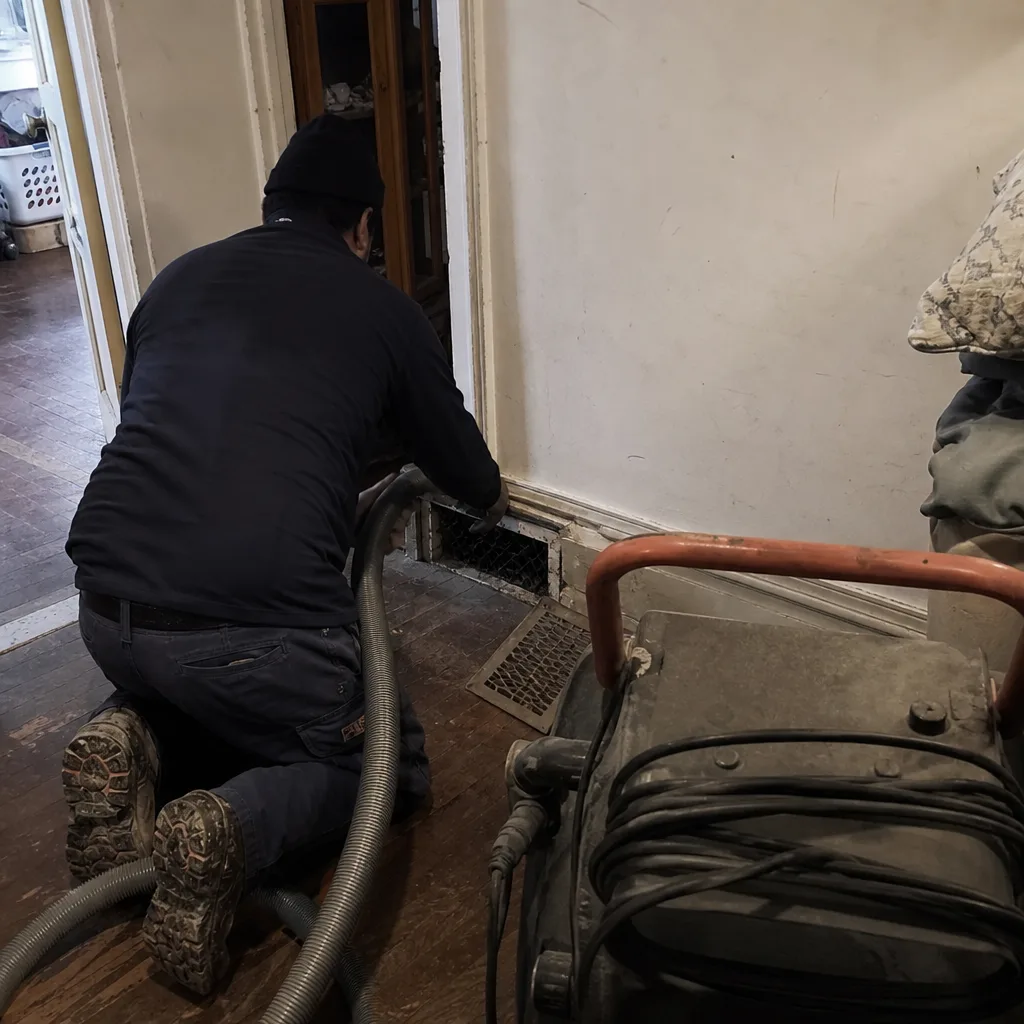 Before
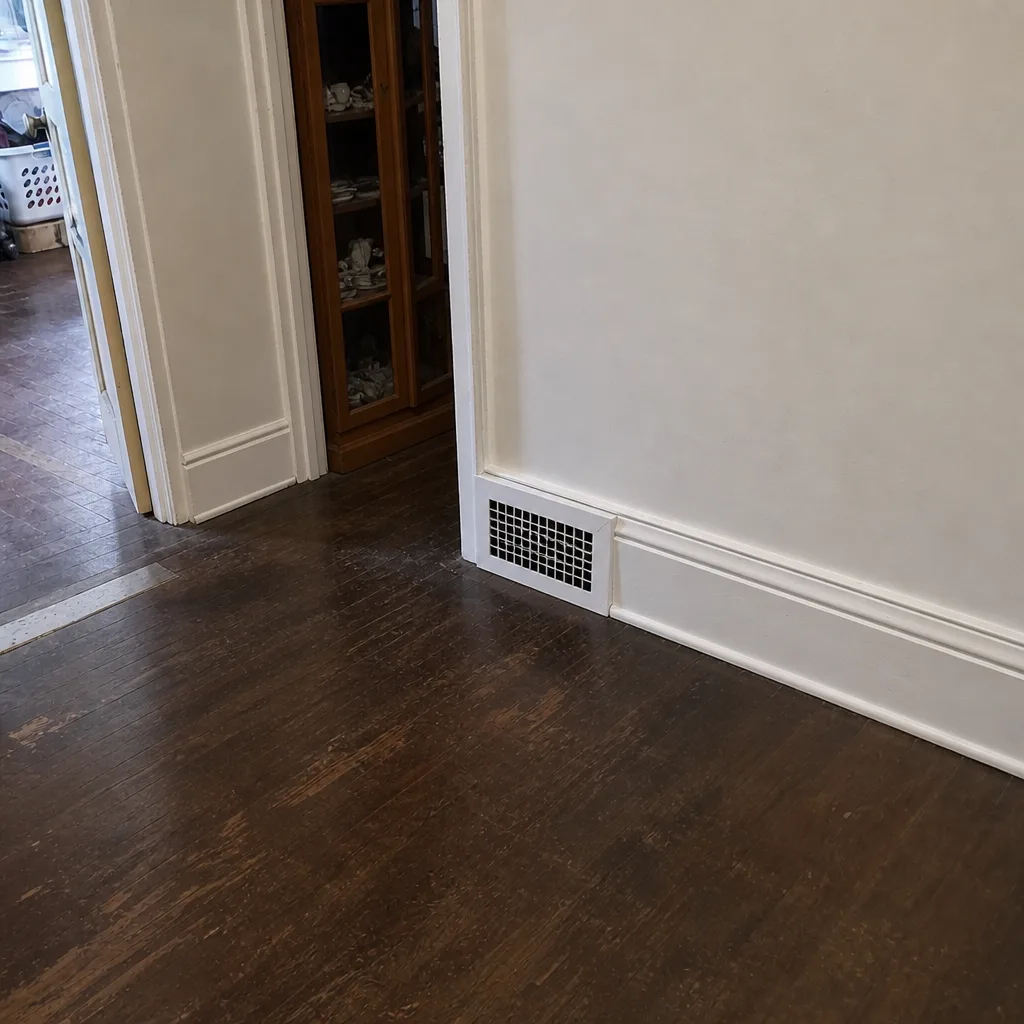 After
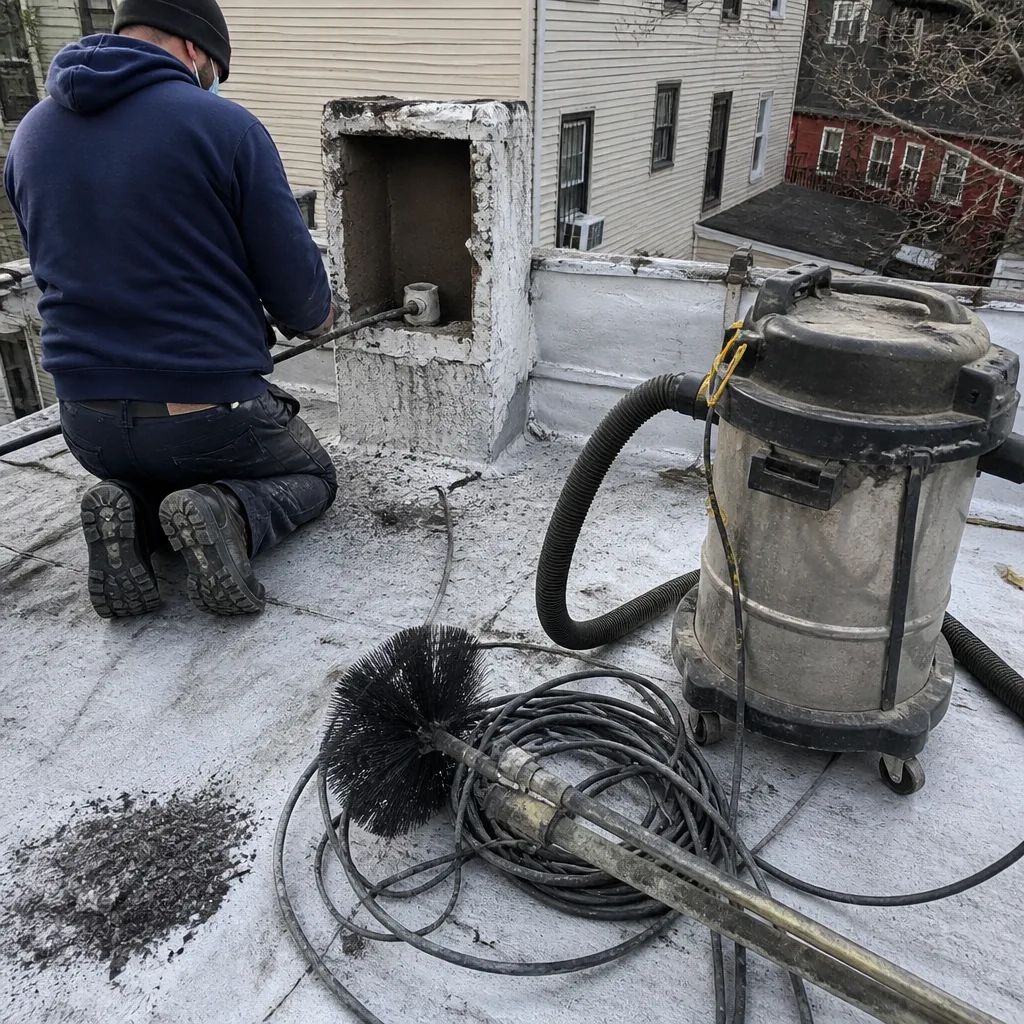 Before
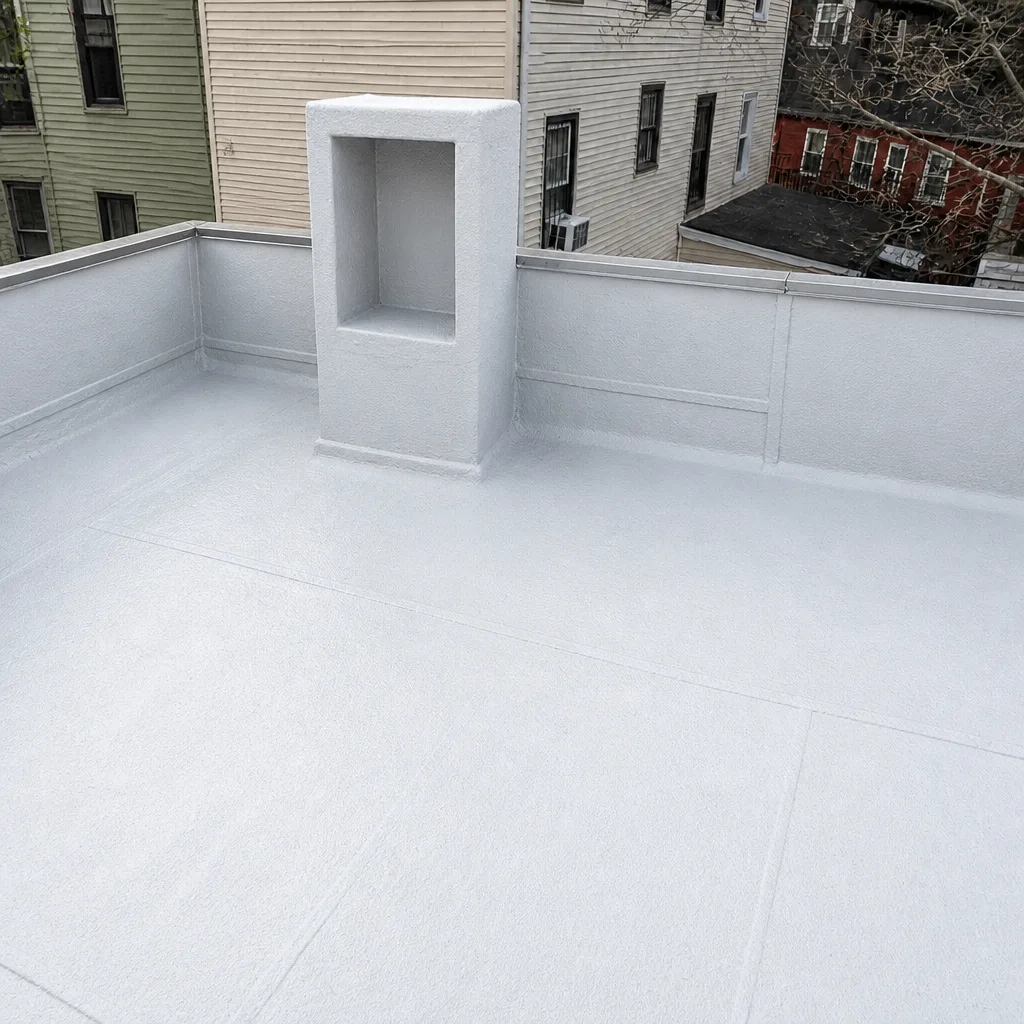 After
 Before
 After
When to Call a Professional
Some signs are routine and some aren’t. Call a professional when you find chew marks or nesting material in the basement duct system, when a musty odor persists at supply registers after a filter change, when airflow at a register drops noticeably, or when a flex duct run is visibly cracked. Any ductwork that was installed before central air existed and hasn’t been inspected in years is also worth a professional look, since retrofitted runs often hide problems that aren’t visible from a grille.
Air Duct Cleaning Bedford-Stuyvesant offers free estimates in Bedford-Stuyvesant – call (866) 665-7533. We answer 24/7. Fast dispatch from 7am to 7pm, Sunday through Friday. Our technicians have up to 15 years of experience, and every job is priced per system by a written estimate agreed before work starts.
Frequently Asked Questions
Most homes do well with a full cleaning every two to three years, but Bedford-Stuyvesant homes near active renovation work or with retrofitted duct in a basement mechanical room often need attention sooner. Seasonal checks matter more than a fixed cleaning interval. If you find debris at return grilles during renovation season or evidence of intrusion at the basement plenum in fall, clean rather than wait for the scheduled year.
Repair comes first whenever there’s a breach. Cleaning a duct system with an open tear or disconnected run disperses loosened debris into the surrounding space. Duct repair and sealing closes the pathway so that the cleaning does what it’s meant to do. That’s why we offer both under one scope: clean it, repair it, seal it, in that order.
Cheap quotes are usually a teaser price that grows once the technician is on site, and the difference usually comes down to equipment. Consumer-grade vacuums and shop-vac setups can’t move the volume of air a Rotobrush or Nikro system can, so they don’t lift the settled layer. The other difference is scope. A quote that covers cleaning only, with no repair or sealing, leaves the source of contamination in place. Ask what equipment is used and what happens if the inspection finds a breach before you book. Call (866) 665-7533 for a free estimate.
Before-and-after photos of your own ducts are the clearest answer. A visual record of the return plenum and blower wheel before and after is what separates a real cleaning from a claim. Ask to see it, and ask what the technician found at inspection. A visit that produces no findings is usually a visit that skipped the inspection.
Yes. Fine gypsum, masonry, and insulation dust from gut-rehabs is airborne and light enough to be pulled into return air. Whether the work is next door or in your own home, dust travels through gaps in duct joints, open basement chases, and return drops. Positive-pressure isolation during the renovation and a professional cleaning afterward is the standard that keeps the system clean.
Book the dryer vent as its own appointment. The dryer vent is a separate pathway with its own fire risk, and we treat it as a dedicated service because most duct-only cleaners overlook or subcontract it. If the dryer takes longer than usual to dry a load, that’s the signal to schedule it.
The Bottom Line
Seasonal duct care in Bedford-Stuyvesant works because it maps to real conditions: renovation dust in spring, humidity and mold risk in summer, rodent intrusion in fall, and startup problems in winter. The work that holds is cleaning, repair, and sealing done in the right order, with professional equipment. Cleaning alone fixes today’s problem. Sealing fixes next fall’s. Rotobrush and Nikro systems do the lifting; Aprilaire and Honeywell filtration handles the air quality that follows. Our technicians have up to 15 years of experience, and every estimate is free.
Written by the team at Air Duct Cleaning Bedford-Stuyvesant.