
Last updated November 22, 2026
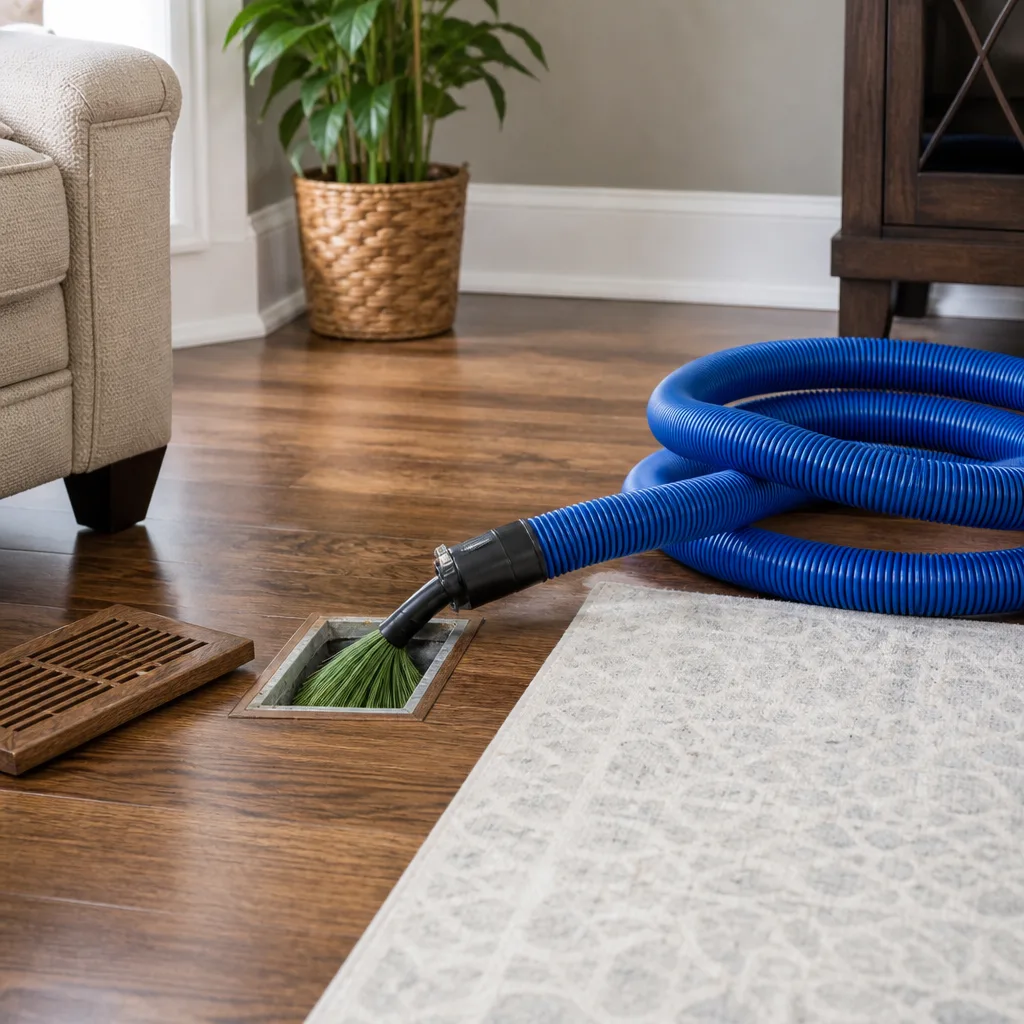 Whole-home duct cleaning
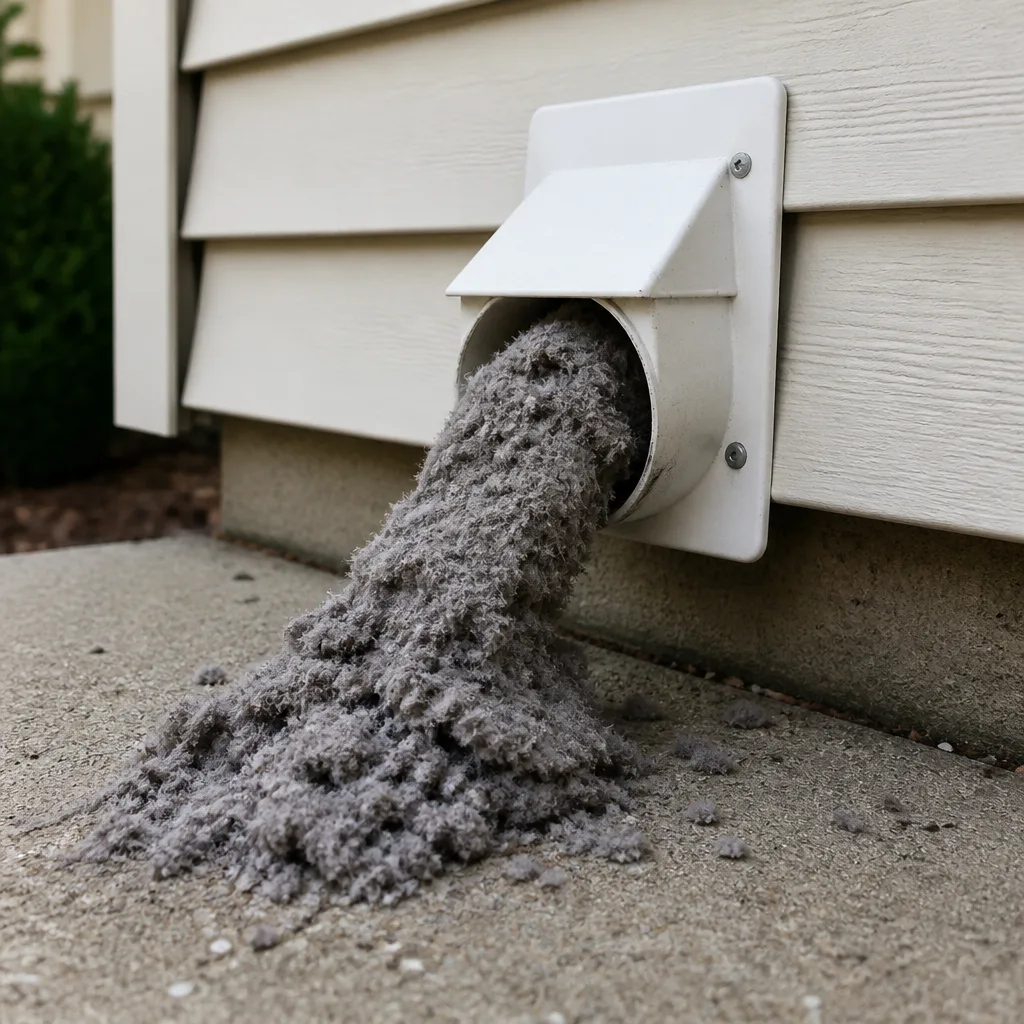 Dryer vent cleaning
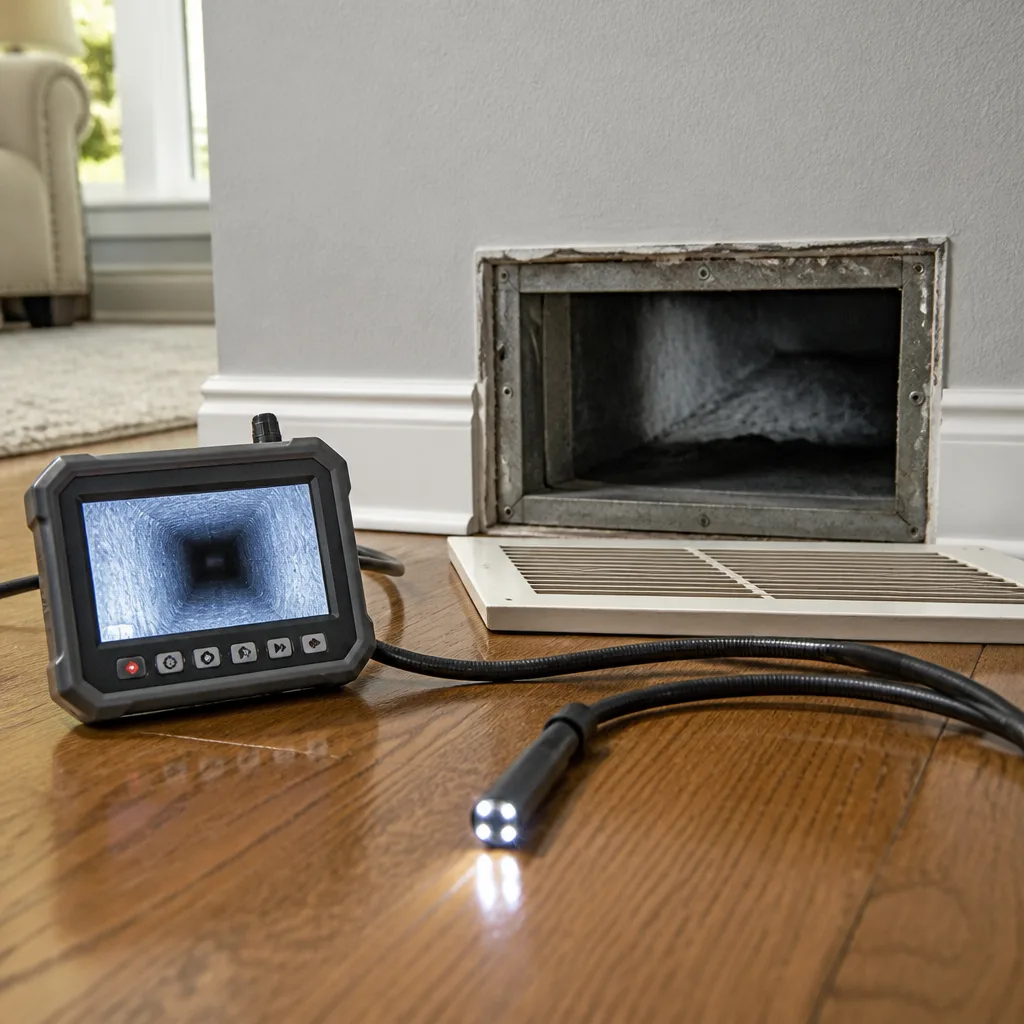 Camera inspection
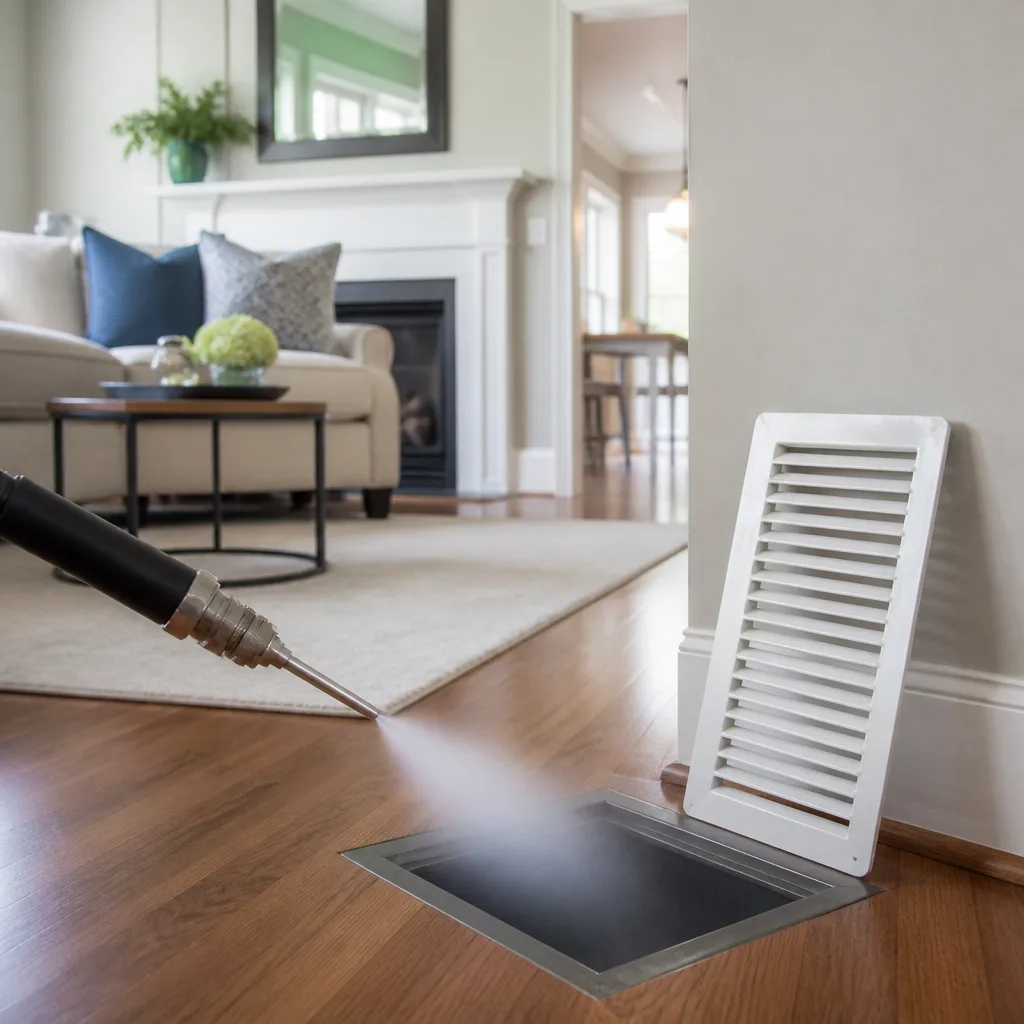 Sanitizing & deodorizing
Whole-system duct and dryer vent check with before-and-after photos - you see exactly what came out of your vents
That "$99 whole-house special" is a bait ad - the real number appears once they are in your hallway, or the "clean" is a shop-vac at the register. We photograph the inside of your ducts before and after instead.
DIY vs Professional Air Duct Cleaning: The Bedford-Stuyvesant Homeowner’s Decision Guide
A homeowner with a good vacuum, a brush kit and 90 free minutes can meaningfully clean the register covers and the first 12 inches of the branch ducts behind them. That’s roughly where DIY capability ends in a pre-war Brooklyn building. The rest of the system – the main trunks, the return plenum, the blower wheel, the branch runs boxed behind plaster – sits behind a wall of equipment that costs more than the cleaning job itself. This guide isn’t a sales pitch for professional service. It’s a map of where the real capability gap sits, so you can decide which tasks are genuinely worth doing yourself and which ones you’re better off handing to a crew with the right tools. We’ll cover what consumer tools can actually accomplish in Bedford-Stuyvesant homes, where they physically cannot reach, and the risk of cleaning part of a system and stopping.
Quick Answer
DIY air duct cleaning in Bedford-Stuyvesant is realistic for register covers, the first foot or so of accessible branch duct, and routine dryer vent lint removal at the exterior termination. Everything beyond that – main supply trunks, return plenums, the blower wheel, and branch runs buried in walls or ceilings – requires negative-pressure extraction and rotary agitation that no consumer vacuum replicates. The deciding factor isn’t your willingness to work; it’s whether your ductwork is accessible enough for hand tools to reach the contamination at all.
Styles & brands we work with
- Whole-home duct cleaning
- Dryer vent cleaning
- Camera inspection
- Sanitizing & deodorizing
Table of Contents
- What You Can Realistically Do Yourself in a Bedford-Stuyvesant Home
- Where DIY Physically Stops in Older Bedford-Stuyvesant Ductwork
- The Risk of Partial Cleaning: Why Disturbing Debris Without Containment Backfires
- The Equipment Reality Check: What Negative-Pressure Systems Actually Do
- Dryer Vents: The One DIY Task Worth Taking Seriously
- A Decision Framework for Your Specific Building
- How Bedford-Stuyvesant Housing and Heating Systems Shape the Answer
- When to Stop Trying and Call a Crew
What You Can Realistically Do Yourself in a Bedford-Stuyvesant Home
Consumer tools have a real, if narrow, role. A shop vacuum with a brush attachment, a flexible register brush, a screwdriver and a drop cloth will handle a meaningful slice of routine maintenance. The key is understanding which slice.
Here’s what a careful homeowner can actually accomplish:
- Register covers and grilles. Remove them, wash them in a tub with dish soap, dry them fully, and reinstall. This alone removes a surprising amount of visible dust, pet hair and cooking residue that collects on the grille face in Bedford-Stuyvesant apartments where kitchens and living spaces share the same air.
- The first 8 to 12 inches of each branch duct. With the register off, a flexible brush on a drill or a long-handled brush can loosen dust from the duct walls just inside the opening. Vacuum it out with a shop vac and a crevice tool.
- Visible debris at the boot. The boot is the angled fitting where the duct meets the floor or wall register. If you can see lint, dust bunnies or small debris sitting at the bottom of the boot, you can remove it.
- Exterior dryer vent termination. Pulling lint from the outside flap and the first stretch of rigid pipe is a genuine fire-safety task that’s within reach of most homeowners.
- Return grille filters. If your system uses a filter grille, replacing it on schedule is one of the highest-value things you can do without any tools at all.
What ties all of these together is direct line of sight. If you can see the surface you’re cleaning and reach it with a hand tool, DIY is reasonable. The moment the contamination is around a corner, behind a transition, or in a section of duct you can’t physically inspect, the calculation changes.
Where DIY Physically Stops in Older Bedford-Stuyvesant Ductwork
Bedford-Stuyvesant has a housing stock that makes this question unusually sharp. Brownstones, rowhouses and pre-war apartment buildings often have ductwork that was retrofit into structures built long before forced-air heating was standard. That means rectangular sheet metal trunks run through joist bays, branch runs that turn at hard 90-degree angles, and return systems that use wall cavities or floor cavities as the return path. None of it was designed for a homeowner with a shop vac.
These are the specific places where DIY capability ends:
- Main supply trunks. These are the large rectangular or round ducts that carry conditioned air away from the air handler. They typically run through ceilings, basements or chase walls and are often 20 to 40 feet long. A consumer vacuum loses suction past the first few feet, and a brush on a flexible rod can’t reach the far end with any meaningful agitation.
- Return plenums. The return side often uses panned joist bays or wall cavities in Bedford-Stuyvesant rowhouses. There’s no duct to remove, no register to pull back, and no way for a homeowner to access the interior surface. Contamination here is common because return air is unfiltered on many older systems.
- The blower wheel and air handler interior. The blower wheel is a squirrel-cage fan inside the air handler. It accumulates a mat of dust over years and reduces airflow as it loads up. Cleaning it requires opening the unit, and doing so safely requires knowing what you’re doing around live electrical components.
- Branch runs boxed behind plaster or drywall. In many Bedford-Stuyvesant homes, branch ducts are enclosed in soffits, chases or ceiling assemblies. There’s no access panel. Professional crews cut access and reseal it, or use rotary tools fed through the register opening itself.
- Transition fittings and elbows. These are the spots where debris accumulates most heavily – the inside corner of every 90-degree turn. A shop vac can’t negotiate the turn, and a brush that does reach it can’t extract what it loosens.
If you’ve ever pulled a register off in a Bedford-Stuyvesant brownstone and shined a light into the duct, you already know the answer. The dust you can see at the opening is the least of it. The dust you can’t see is the reason professional equipment exists.
The Risk of Partial Cleaning: Why Disturbing Debris Without Containment Backfires
Here’s the part most DIY guides skip. Cleaning part of a dirty duct system can make indoor air quality temporarily worse, and there’s a mechanical reason why.
Dust, lint, pet dander and biological growth inside a duct system are mostly settled. They’re adhered to the duct walls or resting at the bottom of horizontal runs. When you disturb them with a brush or a vacuum without a sealed negative-pressure system holding the whole duct network under vacuum, some of what you loosen becomes airborne inside the system rather than leaving it. The next time the blower runs, that material gets pushed into the living space through the registers.
This isn’t a scare tactic. It’s how particulate behaves. The professional answer is negative pressure: seal the system, put the entire duct network under continuous vacuum with a HEPA-filtered unit, and then agitate the surfaces mechanically while the vacuum holds the loosened material in the airstream and captures it. Nothing gets a chance to redistribute into the rooms.
Three specific scenarios where partial DIY cleaning tends to backfire:
- You brush the first foot of a branch duct and stop. You’ve loosened material from the accessible section but left the trunk untouched. Airflow now carries that loosened material deeper into the system or out through other registers.
- You vacuum the boot without sealing the system. The shop vac pulls against open registers elsewhere in the house, so the suction at the boot is weak and you move more debris than you capture.
- You clean supply registers but leave the return side alone. Return air is the unfiltered side on many older Bedford-Stuyvesant systems. Cleaning the supply while the return keeps feeding contamination back into the air handler is a short-lived improvement.
If your ducts haven’t been serviced in years and you’re dealing with allergies, the partial-clean approach is the worst of both worlds: enough disturbance to release material, not enough equipment to capture it. In that situation, doing nothing until a full-system cleaning is genuinely a better choice than a halfway attempt.
The Equipment Reality Check: What Negative-Pressure Systems Actually Do
The gap between consumer and professional duct cleaning isn’t about brand names on a vacuum. It’s about three capabilities that no consumer product replicates: continuous negative pressure across the whole system, mechanical agitation that reaches the full length of each run, and HEPA filtration of the exhaust air so the cleaning doesn’t just relocate the problem.
What professional-grade equipment delivers:
- Whole-system negative pressure. A high-powered vacuum unit connects to the main trunk and pulls the entire duct network under vacuum. Every register, every branch and the return side is under suction simultaneously. Loosened material can only go one direction – into the vacuum.
- Rotary brush agitation. Rotobrush systems feed a rotating brush head down the length of each duct run. The brush spins against the duct walls, loosening adhered contamination along the full length of the run, not just the first foot. The vacuum captures it as it comes free.
- HEPA-filtered containment. Abatement Technologies negative-air equipment and HEPA filtration units capture fine particulate that standard vacuums pass back into the room. This is the same class of equipment used in professional mold and contaminant remediation.
- Compressed-air and whip tools. Nikro systems and similar professional-grade equipment include air whips and skipper balls that travel the length of a duct run, agitating surfaces in every direction. These reach elbows and transitions that no hand tool touches.
- Access and resealing. Professional crews cut small access holes where needed, clean, and then seal the access point as part of the job. They also inspect for duct integrity issues while they’re inside the system.
That last point matters in Bedford-Stuyvesant specifically. Duct repair and sealing is a separate capability from cleaning, and in older rowhouses the two are often linked. A disconnected duct joint or a gap at a boot can pull unconditioned air from a wall cavity into the supply stream. Cleaning without sealing leaves the root cause in place. Look for a provider that handles air duct cleaning in Bedford-Stuyvesant alongside repair and sealing, so the system is left both clean and tight.
Dryer Vents: The One DIY Task Worth Taking Seriously
Dryer vent cleaning is the one part of this conversation where DIY deserves real credit, because the exterior termination is accessible and the risk of neglecting it is real. Lint accumulation in a dryer vent is a recognized fire hazard, and it’s a hazard most duct-only cleaners either skip or subcontract to someone else.
What you can do yourself:
- Unplug the dryer and pull it away from the wall.
- Disconnect the flexible transition duct at the back of the dryer and at the wall.
- Reach into the wall-side rigid pipe and pull out lint by hand as far as you can reach.
- Go outside to the termination flap and clear the lint from the exterior hood and the first accessible stretch of pipe.
- Reconnect the transition duct, making sure it isn’t crushed or kinked behind the dryer.
- Check that the exterior flap opens freely when the dryer runs.
What DIY can’t reliably reach is the full run of rigid pipe between the dryer and the exterior wall – which in Bedford-Stuyvesant rowhouses can be 15 to 25 feet with several elbows, depending on where the laundry sits relative to the exterior. A rotary brush on a flexible rod fed from outside is the professional approach, and it’s the only way to clear the full length. If you notice the dryer taking longer than usual to dry a load, or the exterior flap barely moving when the dryer runs, that’s a sign the full run needs a proper cleaning. Dedicated dryer vent cleaning handles the entire run, not just the reachable ends.
A Decision Framework for Your Specific Building
The honest answer to DIY versus professional depends on your building, not on a general rule. Here’s how to think through it.
DIY maintenance is genuinely sufficient when:
- Your system was professionally cleaned recently and you’re doing routine upkeep between cleanings.
- Registers are accessible and the visible ductwork is in good condition.
- You have a filter grille that you replace on a regular schedule.
- Your dryer vent run is short and mostly straight.
- There’s no one in the household with significant allergies or respiratory sensitivity.
Professional cleaning is the right call when:
- You’re moving into a Bedford-Stuyvesant home and don’t know when the ducts were last cleaned.
- You’ve noticed visible dust streaking on registers or around the air handler.
- Airflow has weakened noticeably at certain registers compared with others.
- Someone in the household has allergies, asthma or other respiratory sensitivity.
- There’s visible mold growth or persistent musty odor near registers or the air handler.
- You’ve recently finished a renovation and drywall dust went through the system.
- You own or manage a rental property where you’re responsible for tenant air quality.
Property managers in Bedford-Stuyvesant have a slightly different calculus from owner-occupants. A full-system cleaning on a turnover, with before-and-after photos of the ducts as documentation, gives you a defensible record of the condition of the system at tenant changeover. That’s a real operational benefit that DIY doesn’t replicate.
For homeowners thinking about the full picture, our related guide on air duct cleaning walks through what a professional full-system job actually involves. And because ducts, coils and the air handler share contamination, HVAC cleaning is often worth booking alongside duct service in the same visit.
How Bedford-Stuyvesant Housing and Heating Systems Shape the Answer
Brooklyn’s climate and its building stock create specific duct conditions that don’t show up everywhere. Bedford-Stuyvesant is a humid summer, cold winter climate, and its rowhouses and brownstones were largely built before central forced-air heating was standard. Most of the ductwork was retrofit, which means systems were shoehorned into structures not designed for them.
What that produces in practice:
- Irregular duct routing. Retrofit ductwork often takes the path of least resistance through joist bays, around chimneys and through soffits. Elbows are frequent and sharp, which is where debris accumulates. That’s also where hand tools can’t reach.
- Return systems that use building cavities. Many Bedford-Stuyvesant rowhouses use panned joist bays or wall cavities as returns. There’s no duct to scrub, and the surfaces were never designed to be cleaned in the first place. Professional cleaning here involves mechanical agitation through a HEPA-filtered vacuum over the cavity surface, which is not something you can do with a shop vac.
- High indoor humidity in summer. Brooklyn’s summer humidity creates conditions where dust inside ducts can support biological growth if moisture enters the system. If you smell a musty odor when the system runs, that’s a signal to look deeper than a register wipe-down.
- Shared air pathways in multi-unit buildings. For property managers running multi-unit Bedford-Stuyvesant buildings, this matters for tenant comfort and may matter for building code compliance – check with your building’s engineer or management to confirm what applies to your property.
The point is that the DIY-versus-professional question is not the same in a 1950s ranch house as it is in a Bedford-Stuyvesant brownstone with retrofit ductwork. The building stock tips the answer toward professional more often than it does in tract homes, simply because there’s less ductwork a homeowner can physically reach.
When to Stop Trying and Call a Crew
The scenarios that call for professional service are specific: you’ve never had the ducts cleaned and don’t know the history, you’re seeing visible dust release at registers when the system runs, airflow has dropped at some registers but not others, someone in the household has respiratory sensitivity, there’s persistent odor or visible growth near the air handler, or you’ve just finished a renovation that put drywall dust into the system. In older Bedford-Stuyvesant rowhouses, the panned-joist return configuration alone usually makes professional cleaning the right answer for any thorough job.
Air Duct Cleaning Bedford-Stuyvesant offers free estimates in Bedford-Stuyvesant – call (866) 665-7533 to talk through what your system needs. We’ll tell you honestly if your ducts don’t need a full cleaning, and we’ll handle air duct cleaning in Bedford-Stuyvesant with the same professional-grade equipment we bring to every job: one flat price per system, agreed before work starts, with before-and-after photos of your ducts as proof of the work.
See the difference
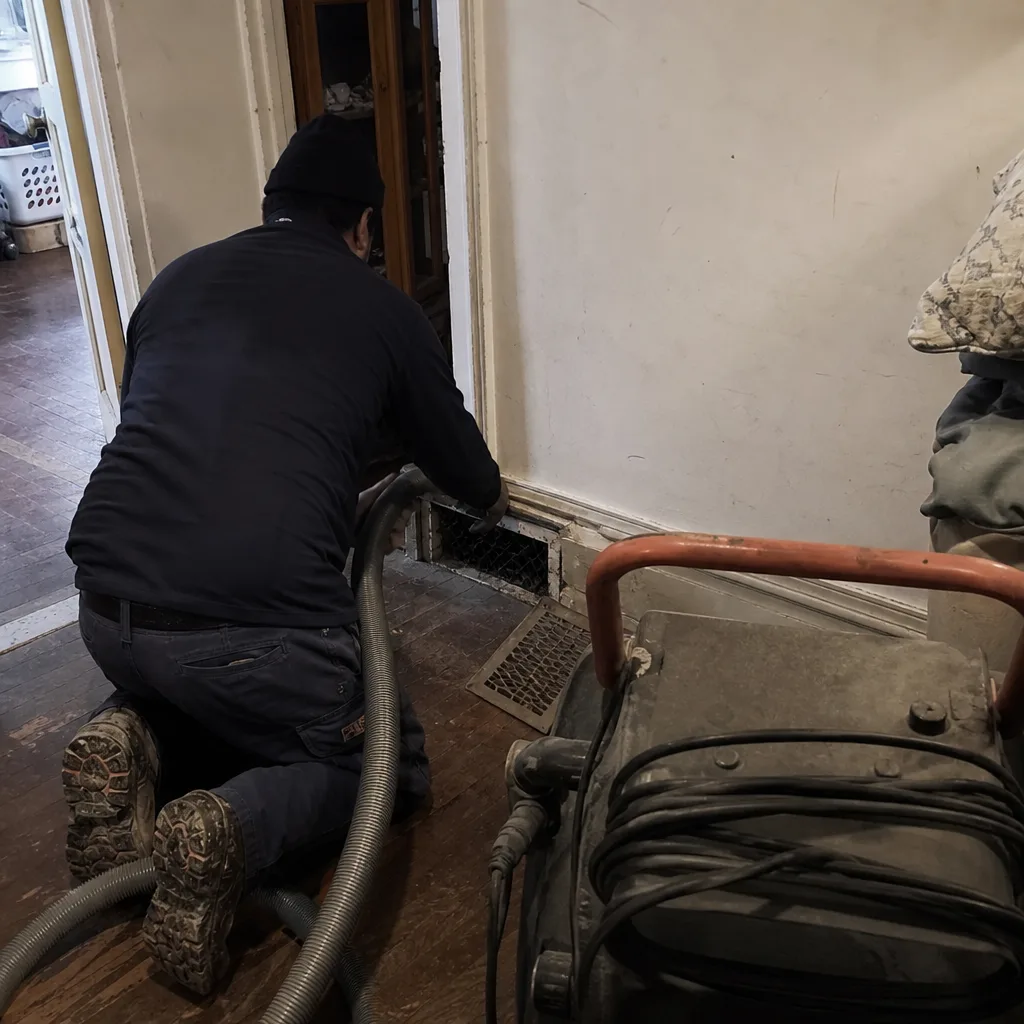 Before
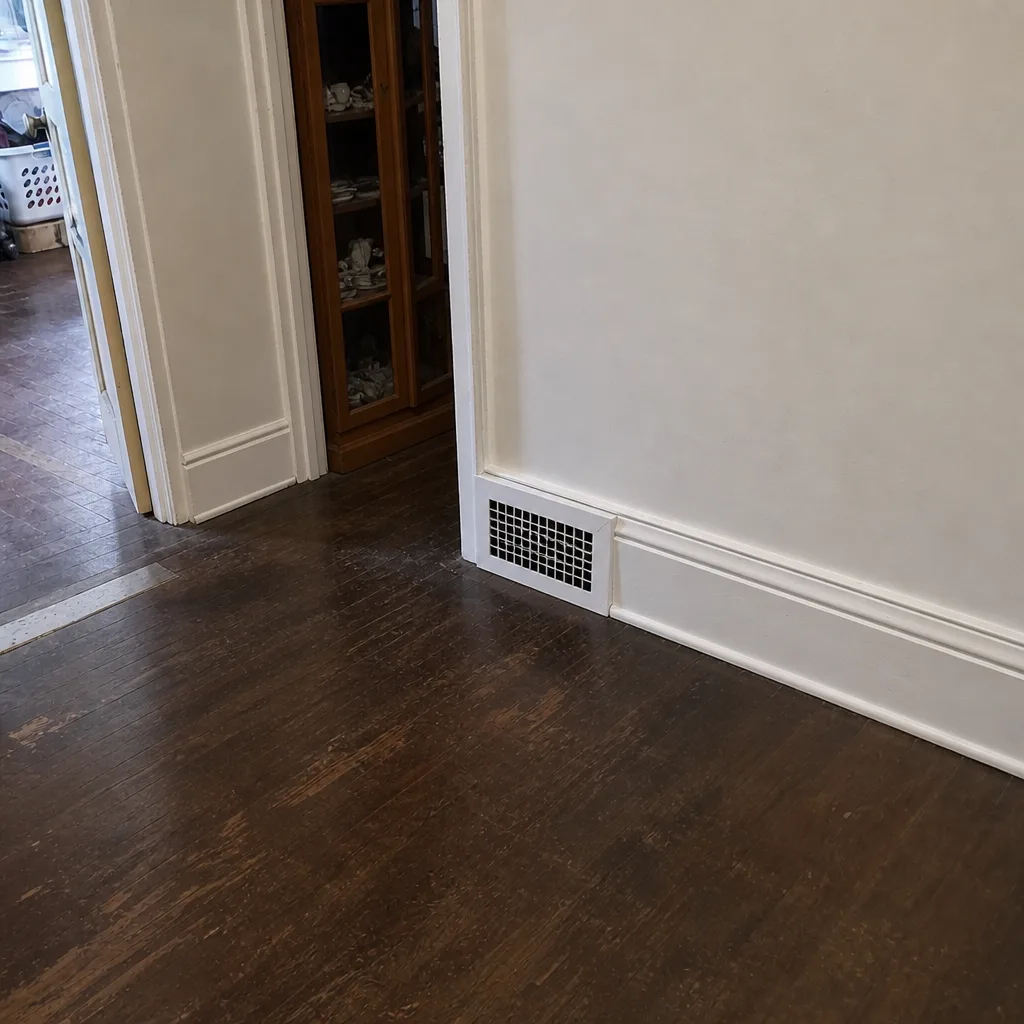 After
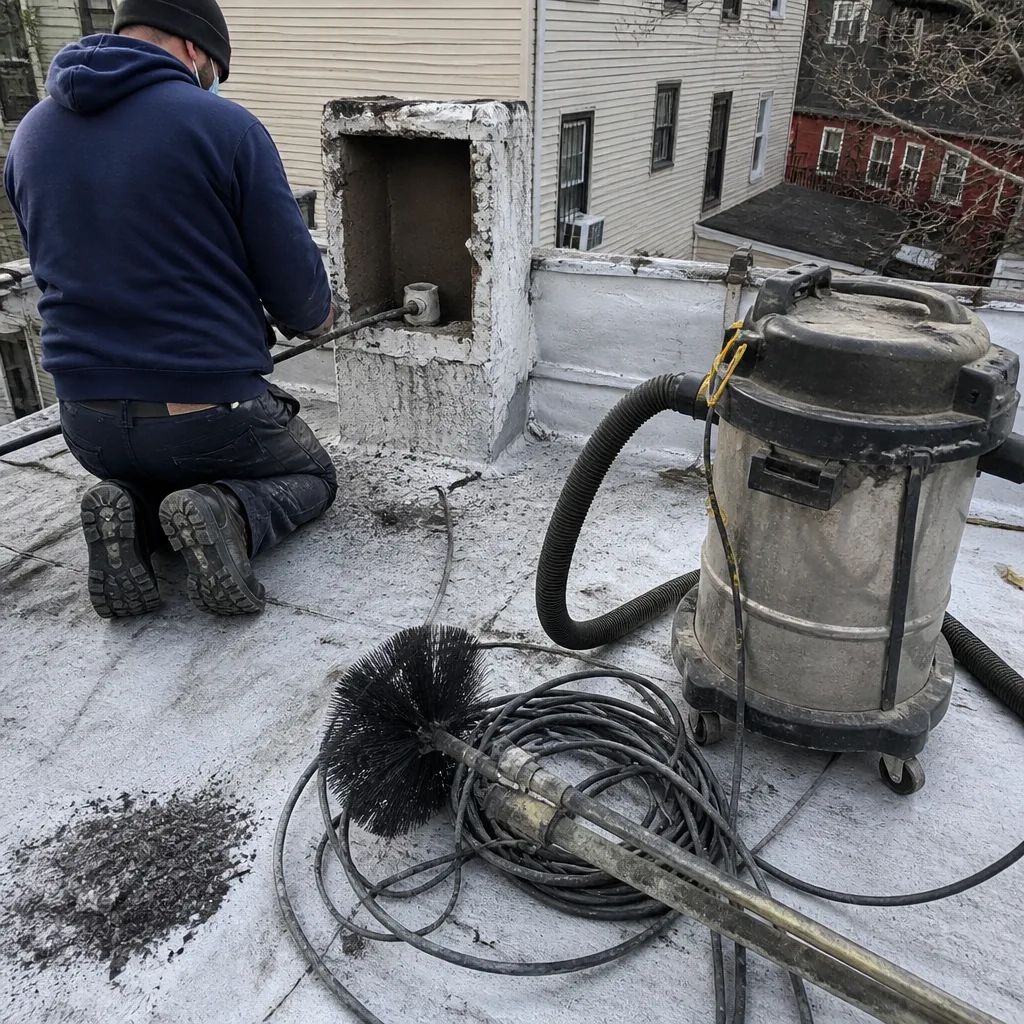 Before
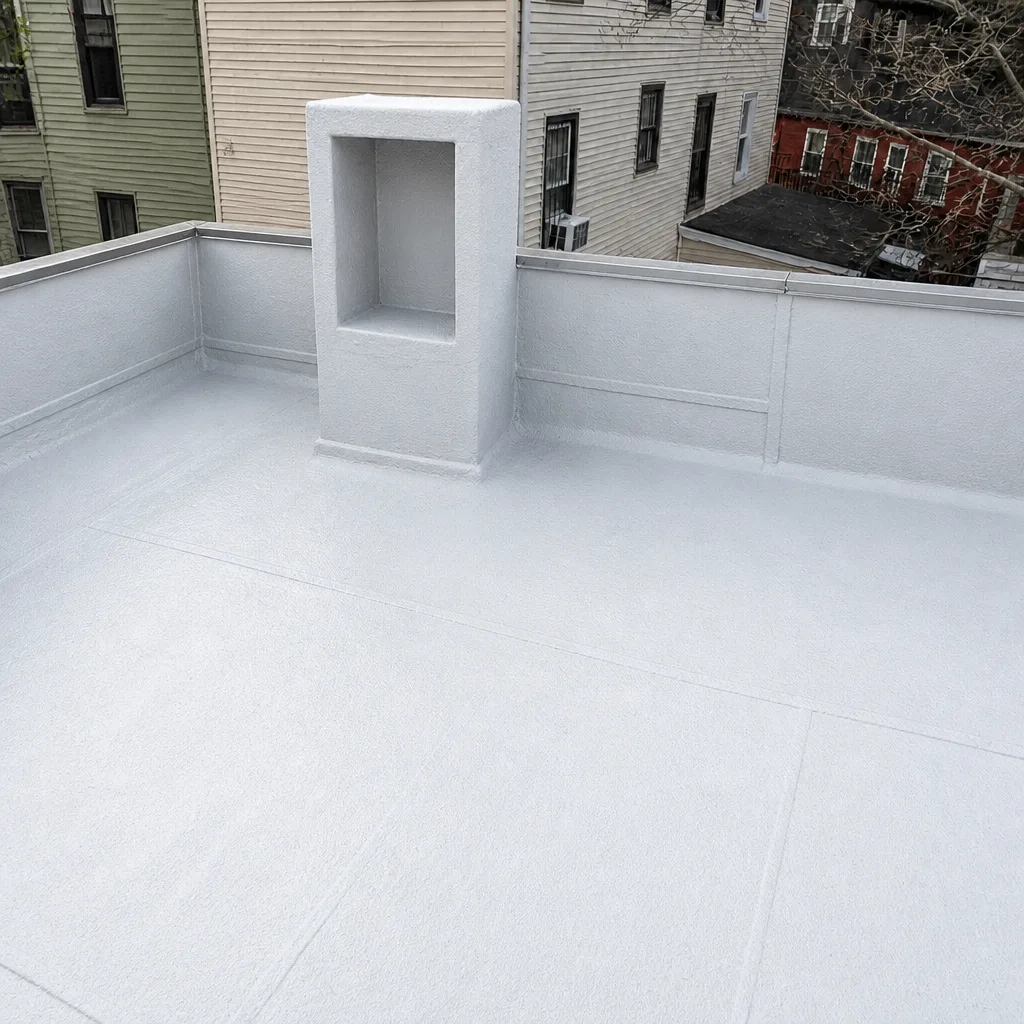 After
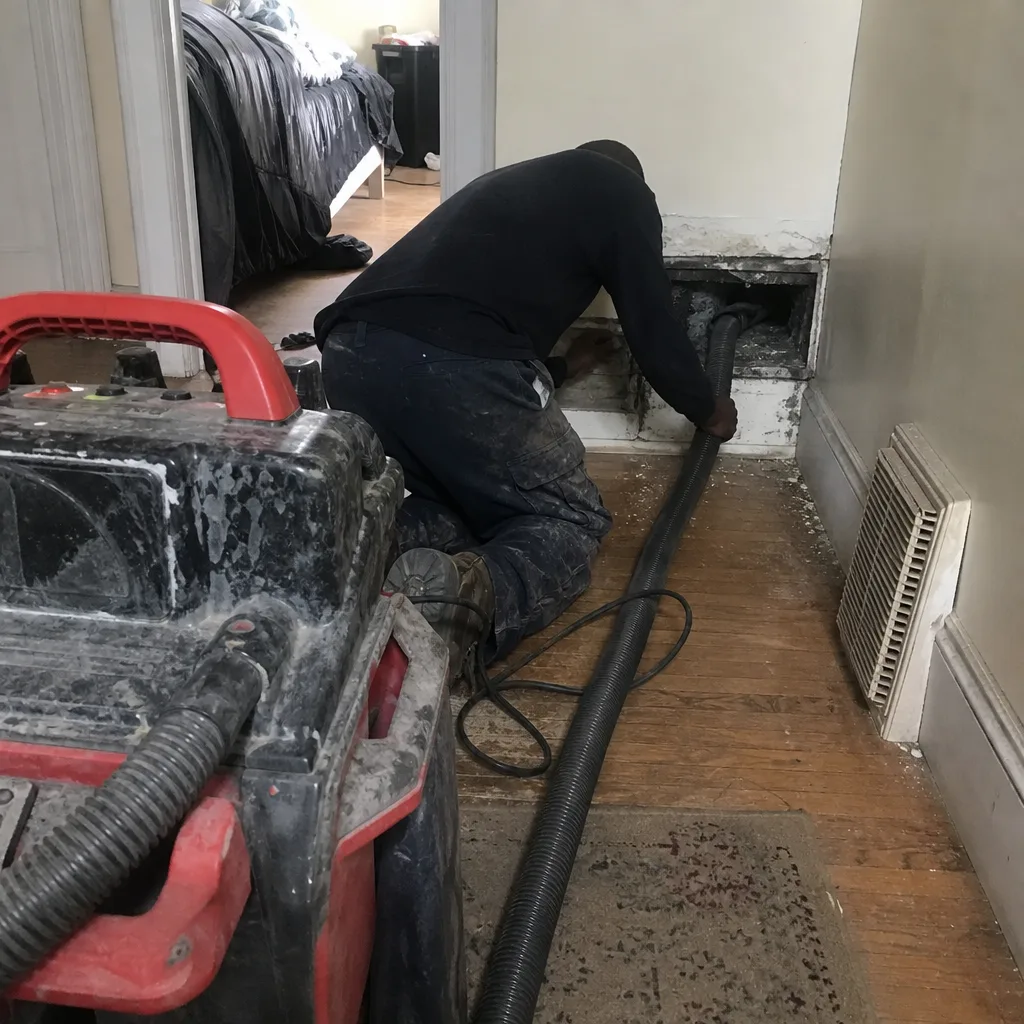 Before
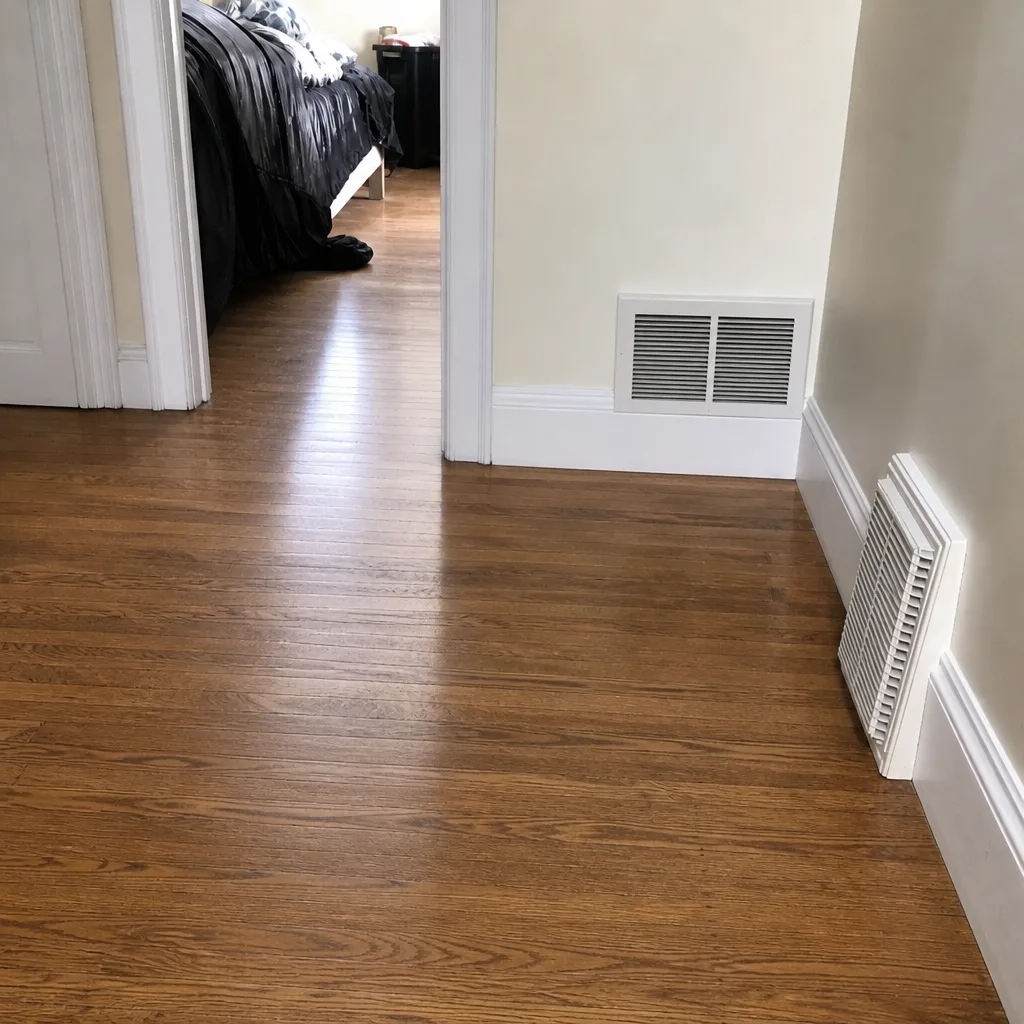 After
Common Mistakes to Avoid
- Cleaning registers only and calling it done. Washing grilles is upkeep, not duct cleaning. The contamination that matters is on the duct walls beyond the register connection, and it’s invisible from the living space.
- Using a shop vac without sealing the system. A shop vac pulls against open registers throughout the house, so suction at any one point is weak. You’ll stir up more than you capture, and the blower pushes the rest back into the rooms.
- Cleaning the supply side and skipping the return. Return air is the unfiltered pathway on many older Bedford-Stuyvesant systems. Cleaning supply ducts while the return keeps loading the air handler is a short-lived improvement.
- Ignoring disconnected duct joints. A disconnected joint behind drywall pulls air from wall cavities and unconditioned space into your supply stream. Cleaning without checking duct integrity leaves the root cause in place.
- Letting the dryer vent go unserviced. Lint accumulation in the full run of pipe is a recognized fire hazard. Clearing only the termination flap leaves most of the run untouched.
- Hiring on price alone. The duct cleaning trade has a coupon-and-upsell reputation because some operators quote low and add line items on site. One flat price per system, agreed before work starts, is the answer to that. Ask for before-and-after photos of your own ducts.
- Skipping the full-system scope in older homes. Many Bedford-Stuyvesant homes have had ductwork added, modified or pieced together over decades. A partial cleaning in a pieced-together system can create more problems than it solves.
Frequently Asked Questions
You can clean register covers and the first foot of accessible branch duct with a shop vac fitted with a brush attachment, and that’s genuinely useful routine maintenance. You cannot clean the main trunks, return plenums, blower wheel or inaccessible branch runs with consumer tools, because a shop vac doesn’t hold the whole system under vacuum and can’t agitate surfaces deep in the system. Call (866) 665-7533 for an honest assessment of what your system actually needs – estimates are free.
Professional air duct cleaning in Bedford-Stuyvesant is priced per system, not per vent, because the work varies with the size and configuration of the ductwork. The written estimate sets the final price, and there’s no per-vent add-on or coupon-based bait-and-switch. What matters more than a headline number is whether the cleaning covers the main trunks, return side and blower, and whether you get before-and-after photos. Call (866) 665-7533 for a free estimate on your specific system.
Cheap quotes usually clean less: registers and the first few feet of accessible branch duct, with no full-system negative pressure and no return-side work. They often add line items on site once the technician is in the door. A provider that quotes one flat price per system, agreed before work starts, and shows before-and-after photos of your own ducts is quoting for the full job. Call (866) 665-7533 if you want a straight quote on the whole system.
Ask for before-and-after photos of your ducts, taken during the job. A professional crew can document what they found and what they removed, including the main trunks and return side. If a provider can’t or won’t photograph the work, that’s a signal worth taking seriously. Call (866) 665-7533 to schedule a cleaning with photo documentation included.
Most homes don’t need duct cleaning on a fixed schedule – it depends on the system, the occupants and events like renovation or move-in. Homes with pets, allergy sufferers, or recent renovation work need it more often; homes with regular filter changes and clean systems can go years. A visual inspection tells you more than a calendar. Call (866) 665-7533 for a no-pressure assessment of your Bedford-Stuyvesant system.
Consumer brushes and shop vacs can dislodge duct insulation, especially flexible duct, and can pull apart poorly connected joints. In older Bedford-Stuyvesant rowhouses, retrofit ductwork is often pieced together, so the risk of loosening a joint with a rough brush is real. If your system is old or you’re unsure of its condition, a professional inspection first is cheaper than a repair. Call (866) 665-7533 for a free estimate.
Clearing the exterior termination and the transition duct behind the dryer is a reasonable DIY task and genuinely improves fire safety. The full run of rigid pipe between the dryer and the exterior wall is what DIY usually can’t reach, and in Bedford-Stuyvesant rowhouses that run can be long with several elbows. A rotary brush fed from outside clears the whole run. We handle dryer vent cleaning as a dedicated service – call (866) 665-7533 for a free estimate.
The Bottom Line
DIY air duct maintenance in Bedford-Stuyvesant has a real but narrow scope: register covers, the first foot of branch duct, filter changes and exterior dryer vent upkeep. Beyond that, the physical layout of older Bedford-Stuyvesant ductwork and the capability gap between consumer tools and professional negative-pressure equipment make professional cleaning the right call. The decision comes down to your building, not to a general rule. If you’re unsure, the cheapest thing you can do is get an honest assessment before you start. Call (866) 665-7533 for a free estimate – one flat price per system, agreed before work starts, with before-and-after photos of your ducts.
Our technicians have up to 15 years of experience with the equipment that matters here: Rotobrush rotary-brush systems, Nikro HVAC equipment, and Abatement Technologies negative-air filtration. We handle cleaning, repair, sealing and sanitizing in one scope, so the system is left both clean and tight.
Written by the team at Air Duct Cleaning Bedford-Stuyvesant.